
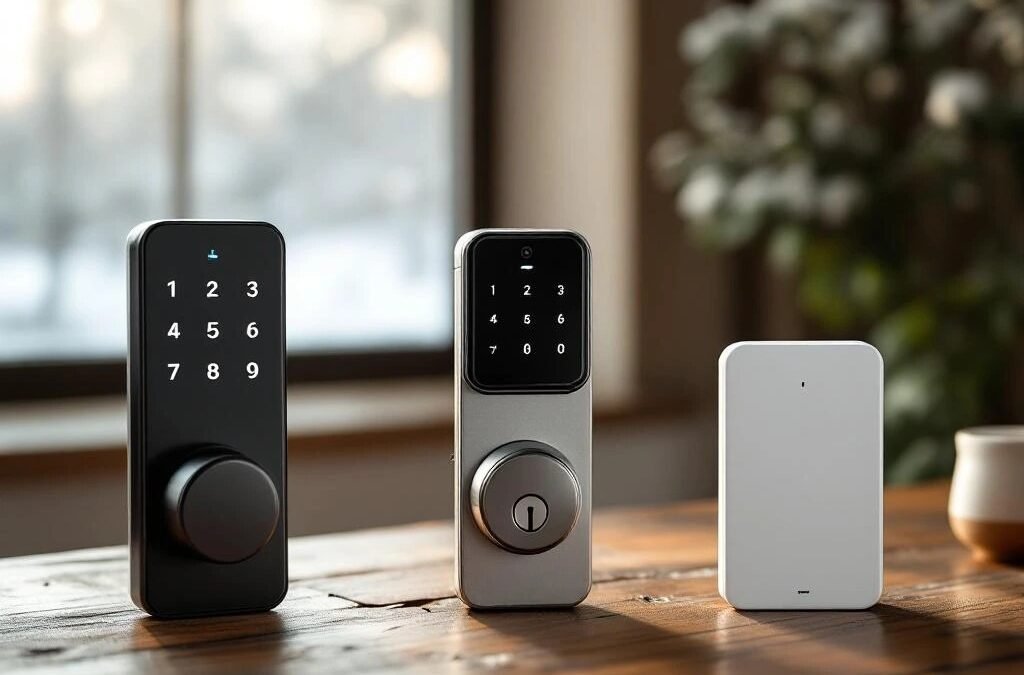
Smart Lock Installation Cost in Canada: What to Budget in 2026
You’ve seen them at Home Depot, Best Buy, and all over Amazon — smart locks that let you unlock your door with your phone, give temporary codes to guests, and check if you locked up from the office. But how much does it actually cost to get one properly installed on a Canadian home?
The short answer: between $250 and $800 for a single door, depending on the lock you choose and whether you install it yourself or hire a professional. But the real answer depends on your door type, your existing deadbolt, and a few Canada-specific factors that most American review sites never mention.
Here’s a full cost breakdown so you can budget properly before you buy anything.
Smart Lock Cost Breakdown by Type
Retrofit Smart Locks (Keep Your Existing Deadbolt)
These locks replace only the interior side of your deadbolt, leaving your existing exterior key cylinder in place. You keep your old keys as a backup and add smart features on top.
August Wi-Fi Smart Lock (4th Gen): $250 – $300. The most popular retrofit option in Canada. Fits over your existing deadbolt in about 15 minutes. Works with Alexa, Google, and Apple HomeKit. The downside: it’s bulky on the inside of the door, and the Wi-Fi module can be sluggish in larger homes.
Level Lock+: $300 – $350. Almost invisible — fits inside the door itself. Sleek design, but requires Apple HomeKit (no native Google support). Battery lasts about a year. Great for condos in Toronto or Mississauga where you don’t want a gadget-looking lock on the door.
Installation cost: Most homeowners can install retrofit locks themselves in 15-30 minutes with just a screwdriver. Professional installation runs $75 – $150 if you’d rather not deal with it.
Full Replacement Smart Locks
These replace your entire deadbolt — both interior and exterior sides. You get a keypad, touchscreen, or fingerprint reader on the outside.
Schlage Encode Plus: $350 – $400. The best full-replacement smart lock available in Canada right now. Built-in Wi-Fi (no bridge needed), works with Apple Home Key so you can tap your iPhone or Apple Watch to unlock. The keypad is solid, the build quality is excellent, and Schlage has been making locks in Canada for decades.
Yale Assure Lock 2: $280 – $380 depending on the module. Modular design — you pick Wi-Fi, Bluetooth, or Matter connectivity separately. Clean look, reliable keypad. Available at most Canadian retailers. The module system is clever but adds complexity if you want to upgrade later.
Weiser Halo: $250 – $300. Weiser is a Canadian brand (owned by Spectrum/Kwikset) that’s been making locks for Canadian doors for over 100 years. The Halo has built-in Wi-Fi, a fingerprint reader on some models, and handles Canadian door standards well. Often overlooked because they don’t have the marketing budget of Schlage or Yale, but it’s a solid choice.
Installation cost: If your door already has a standard deadbolt, a full replacement takes 20-45 minutes as a DIY project. Professional installation runs $100 – $200 because the installer needs to ensure proper alignment, test the motorized bolt, and configure the app on your phone.
Commercial-Grade Smart Locks
For offices, retail shops, and rental properties that need audit trails, multiple user codes, and remote management.
Schlage commercial keypad locks: $400 – $700 per door. Up to 100 user codes, audit trail of every entry, heavy-duty construction rated for high-traffic doors.
Smart access control systems: $800 – $2,500 per door including reader, controller, and wiring. These tie into a centralized system where you manage all doors from one dashboard. Common for GTA businesses with multiple entry points.
Installation cost: Commercial locks almost always require professional installation — $150 – $400 per door depending on wiring requirements and whether you’re integrating with an existing access control system.
DIY vs Professional Installation: When It’s Worth Paying
Smart locks are one of the few security products where DIY installation actually makes sense — for certain lock types and certain doors.
DIY Makes Sense When:
You’re installing a retrofit lock like the August on a standard wood door with an existing deadbolt. You literally remove four screws, pop off the old interior assembly, and attach the smart lock. It’s closer to changing a light bulb than doing a renovation.
Full replacement locks on standard pre-drilled doors are also manageable for most people. If your door already has the standard 2-1/8″ bore hole and the backset matches (usually 2-3/4″ in Canadian homes), the new lock drops right in.
Professional Installation Is Worth It When:
Your door is non-standard. Many older homes in Toronto, Etobicoke, and Scarborough have doors that were installed before lock bore holes were standardized. If the holes don’t match, you need drilling — and drilling through a steel fire-rated door or a fibreglass entry door requires the right tools and experience.
You have a multi-point lock. Common on European-style doors and some newer builds in Vaughan and Richmond Hill. These locks engage at three or more points along the door frame. Smart lock compatibility is limited and installation is not a beginner project.
You want integration with cameras or an alarm system. If the smart lock is part of a larger security setup — triggering cameras when a code is entered, or arming the alarm when you lock up at night — a professional ensures everything talks to each other properly.
You’re installing on a commercial property. Liability, fire code compliance, and proper configuration of user access levels make professional installation the only sensible option for businesses.
What Affects Smart Lock Installation Cost in Canada
Your Door Type
Wood doors are easiest to work with. Steel doors (common on GTA homes built after 2000) require metal-cutting bits if any modifications are needed. Fibreglass doors need careful drilling to avoid cracking. French doors or double doors may need additional hardware or a different lock model entirely.
Door Thickness
Canadian exterior doors are typically 1-3/4″ thick, which is what most smart locks are designed for. Older homes sometimes have thinner doors (1-3/8″), and some newer custom homes have thicker doors (2″ or more). If your door isn’t standard thickness, you may need spacer kits or a different lock model — an extra $20 – $50 for parts and potentially more labour time.
Existing Deadbolt Compatibility
If your current deadbolt has a standard bore hole size and backset, installation is straightforward. If the holes need to be re-drilled or enlarged, that adds $50 – $150 to the labour cost. This is more common in homes built before 1980.
Wi-Fi and Connectivity
Smart locks need a reliable connection to work remotely. If your Wi-Fi doesn’t reach your front door well (common in brick homes across the GTA), you may need a Wi-Fi extender ($40 – $100) or a dedicated smart home hub ($80 – $150). Some locks use Bluetooth only and need a separate bridge device for remote access — factor in an extra $50 – $100.
Number of Doors
Most installers offer better per-door pricing when you’re doing multiple doors. A single door might cost $150 for installation, but three doors might be $350 total. If you have a front door, side entrance, and garage entry door, doing them all at once saves money.
Hidden Costs Most People Miss
Batteries and replacements: Smart locks run on batteries — typically 4 AA batteries that last 6-12 months. In Canadian winters, battery life drops significantly. Cold weather can cut battery life in half compared to what the manufacturer claims (those tests are done at room temperature, not at -20°C on your front porch in January). Budget $20 – $40 per year per lock for batteries, or spend more upfront on a model with a rechargeable battery.
Subscription fees: Some smart lock brands charge monthly fees for features like remote access history, guest code scheduling, or integration with other smart home devices. August charges $5/month for their premium features. Yale’s app is free but some integrations require a $3 – $10/month subscription through partner platforms. Schlage’s app is fully free with no subscriptions — one of the reasons we often recommend them.
Door hardware adjustments: If your door doesn’t close and latch smoothly, a motorized smart lock will struggle. The motor in a smart lock isn’t as forgiving as your hand turning a key. Doors that stick, frames that have shifted (common in older GTA homes that have settled), or strike plates that are slightly off need to be fixed first. A handyman or locksmith can adjust this for $75 – $150, but it’s an unexpected cost if you didn’t budget for it.
Backup power or access: What happens during a power outage? Wi-Fi goes down, which means remote access stops working. Bluetooth still works if you’re at the door. But if the lock batteries die too, you need a backup — most smart locks have an emergency key override or a micro-USB port to provide temporary power. Make sure you know where your emergency key is and that it works.
Canadian-Specific Considerations
Winter Performance
This is the single biggest factor that American smart lock reviews won’t tell you about. Canadian winters are brutal on smart locks. The motorized bolt mechanism can slow down or struggle when temperatures drop below -15°C. Touchscreen keypads become less responsive with cold fingers or when the screen itself is cold. Fingerprint readers are essentially useless with gloves on.
For GTA homeowners, look for locks with physical keypads (buttons you can press with gloves) rather than touchscreens. Schlage’s backlit keypad works well in cold weather. The Yale Assure Lock 2 keypad also handles winter reasonably well.
Battery Life in Cold Weather
Lithium batteries perform significantly better than alkaline in cold temperatures. If your smart lock uses AA batteries, spend the extra money on lithium AAs (Energizer Ultimate Lithium). They cost about $15 for a 4-pack instead of $5 for alkaline, but they’ll last through a full Canadian winter without dying on you in February.
Door Expansion and Contraction
Canadian homes experience significant temperature swings — from -25°C to +35°C over the course of a year. Wood doors expand and contract with these temperature changes, which can cause alignment issues with a smart lock over time. Steel and fibreglass doors are more stable. If you have a wood door, make sure your smart lock is installed with a bit of tolerance in the alignment so it can handle seasonal movement.
Canadian Retail Availability
Not every smart lock sold in the US is available in Canada, and some models have different firmware or features for the Canadian market. Stick with brands that have proper Canadian distribution: Schlage, Yale, Weiser, and August are all widely available at Home Depot, Lowe’s, Best Buy, and Amazon.ca. Avoid ordering US-only models from Amazon.com — warranty claims become complicated and some features may not work with Canadian smart home platforms.
What We Recommend for GTA Homeowners
Best overall: Schlage Encode Plus ($350 – $400). Reliable, great Canadian winter performance, no subscription fees, works with Apple Home Key. The keypad handles gloved fingers well, and the build quality is excellent.
Best budget: Weiser Halo ($250 – $300). Canadian brand, built-in Wi-Fi, no bridge needed. Solid performance at a lower price point. Available at most hardware stores across the GTA.
Best retrofit: August Wi-Fi Smart Lock ($250 – $300). Keep your existing keys and add smart features. Quick DIY installation. Just be aware of battery life in winter — switch to lithium batteries before November.
Best for rentals and Airbnb: Yale Assure Lock 2 with Wi-Fi ($320 – $380). Easy to create and delete guest codes, decent app for managing multiple properties, and the module system means you can upgrade connectivity without replacing the whole lock.
Frequently Asked Questions
How much does it cost to install a smart lock in Canada?
For a single door, expect to pay $250 – $800 total including the lock and installation. The lock itself costs $250 – $400 for residential models. Professional installation adds $75 – $200 depending on your door type and whether modifications are needed. DIY installation is free if your door has a standard deadbolt bore hole.
Can I install a smart lock myself?
Yes, for most residential retrofit and replacement locks on standard doors. You’ll need a screwdriver and about 20-45 minutes. If your door needs drilling, has a non-standard bore hole, or you’re integrating with a security system, professional installation is recommended.
Do smart locks work in Canadian winters?
They do, but performance varies by model. Touchscreen locks can be sluggish below -15°C, and alkaline batteries drain faster in cold weather. Choose a lock with a physical keypad and use lithium batteries for best winter performance. Locks installed on doors that are somewhat sheltered (under a porch roof or in a recessed entry) perform better than fully exposed installations.
Do smart locks need Wi-Fi to work?
Smart locks work via Bluetooth for in-person unlocking, which doesn’t require Wi-Fi. However, you need Wi-Fi for remote features — locking and unlocking from your phone when you’re away, receiving notifications, and checking access logs. During a power outage, local Bluetooth access still works as long as the lock has battery power.
Are smart locks safe from hacking?
Modern smart locks from reputable brands use AES-128 or AES-256 encryption, which is the same standard used by banks. The real security risk isn’t hacking — it’s weak user codes (don’t use 1234), shared codes that aren’t deleted after use, and leaving Bluetooth discoverable mode on. A properly configured smart lock from Schlage, Yale, or August is more secure than hiding a spare key under the mat.
How long do smart lock batteries last in Canada?
Manufacturers typically claim 6-12 months, but in Canadian conditions, expect 4-8 months with alkaline batteries. Lithium batteries (like Energizer Ultimate Lithium) can extend that to 8-12 months even through winter. Most smart locks will send you a low-battery warning through the app weeks before they die, giving you plenty of time to replace them.
Get Your Smart Lock Professionally Installed
Whether you’ve already bought a smart lock and want it installed properly, or you want advice on the best option for your door and budget, we’re here to help. We install smart locks across the GTA — from downtown Toronto to Vaughan, Markham, Richmond Hill, Mississauga, and Brampton.
Get a free quote or call us at (416) 890-3639 to discuss your smart lock installation.